
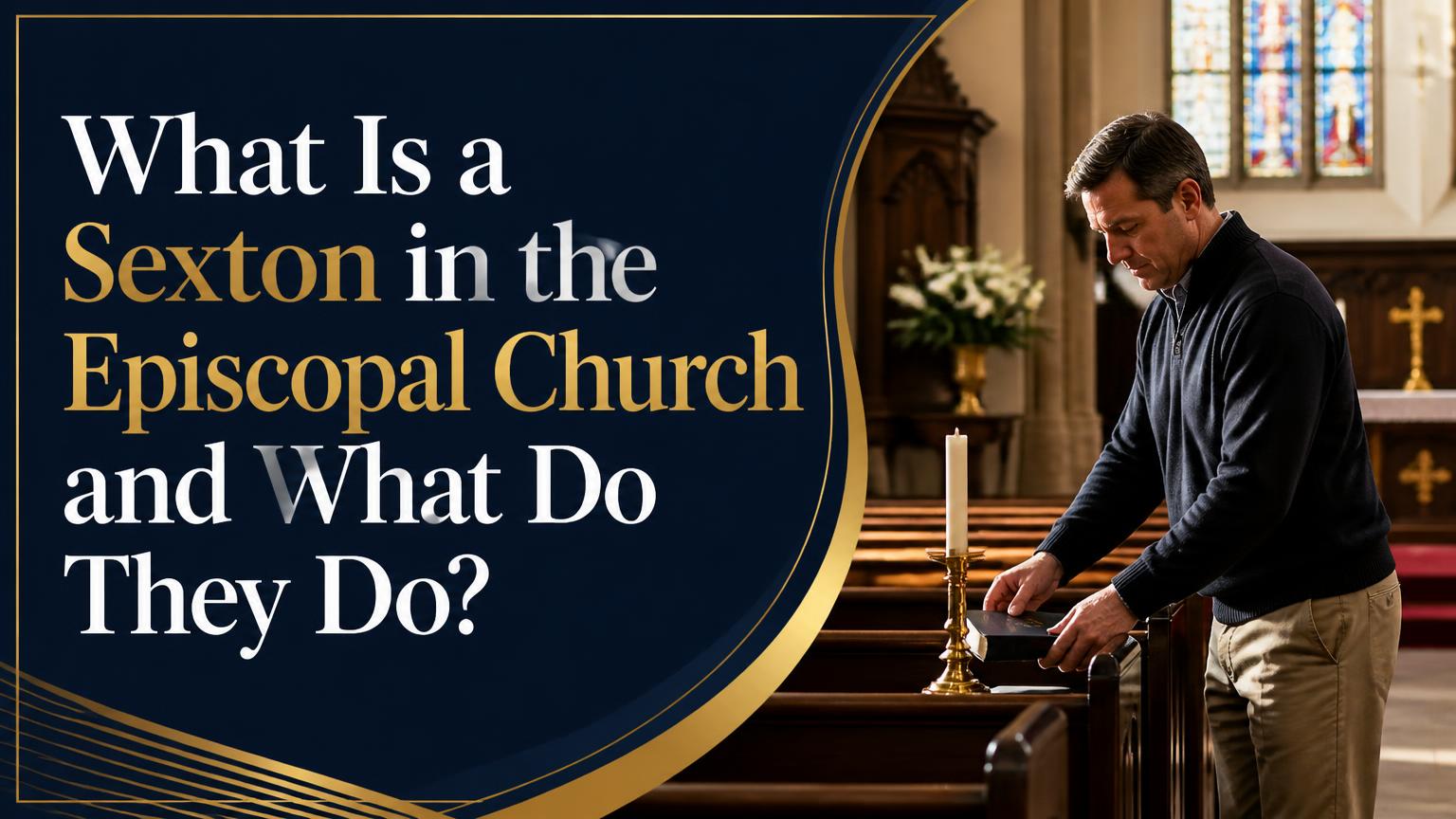
What Is a Sexton in the Episcopal Church? A sexton is usually a lay employee or volunteer responsible for caring for a church building, its grounds, and sometimes its cemetery. The role may include preparing worship spaces, opening and securing the property, coordinating maintenance, assisting with funerals and weddings, and ensuring that parish activities can take place safely and smoothly. A sexton is not ordinarily an ordained minister, and the exact duties depend on the parish, its facilities, and the responsibilities assigned by the rector, vestry, or other church leadership.
What Is a Sexton in the Episcopal Church?
A Sexton Is a Lay Caretaker, Not an Ordained Office
In the Episcopal Church, “sexton” generally describes a practical parish role rather than a sacramental or ordained office. A sexton may be a paid staff member, a part-time worker, or a volunteer. The person may or may not belong to the congregation and does not receive priestly or diaconal authority simply by holding the position.
The role connects the church’s physical life with its worship and ministry. A well-maintained building, prepared sanctuary, functioning heating system, clean meeting rooms, and secure grounds all support the parish’s religious work. The sexton makes that support possible, often through tasks that are visible during services and many others that happen before or after the congregation arrives.
Typical Building and Grounds Responsibilities
A sexton commonly oversees or performs routine care for the church property. Responsibilities can include unlocking and locking doors, checking rooms, managing heating and lighting, cleaning or arranging spaces, taking out rubbish, maintaining grounds, and identifying repairs that require a contractor. In smaller parishes, the sexton may perform much of this work personally; in larger parishes, the sexton may supervise custodial staff and outside service providers.
The role can also include practical safety work. A sexton may check walkways, respond to spills or weather-related hazards, monitor building access, maintain supplies, and help prepare the property for emergency situations. In many Episcopal parishes, the vestry retains overall responsibility for property and finances, while the sexton handles day-to-day care under an agreed reporting structure.
How Sextons Support Worship
A sexton may prepare the church before a service by opening the building, arranging chairs, checking lights and sound equipment, setting up seasonal furnishings, and ensuring that the sanctuary is ready. Depending on the parish’s customs, the sexton may also assist with altar linens, processional equipment, candles, or other physical arrangements. These duties often overlap with the work of a sacristan, altar guild, or verger, so the parish’s job description matters.
During worship, the sexton may remain available to address building problems, adjust temperature, assist with access, or respond to an unexpected need. Afterward, the sexton may secure the building, reset the room, clean up, and prepare it for the next activity. The work is usually designed to be discreet: the sexton helps the liturgy proceed without becoming its leader.
Funeral, Wedding, and Cemetery Duties
Some sextons help prepare the church for weddings, funerals, baptisms, concerts, parish dinners, and community events. They may arrange furniture, coordinate access for musicians or funeral directors, prepare rooms, manage deliveries, or ensure that the building is restored afterward.
Where an Episcopal church maintains a churchyard or cemetery, the sexton may also care for graves and grounds, keep burial records, coordinate grave openings or closings, and work with families and funeral professionals. These responsibilities vary considerably. Some parishes contract cemetery work to a specialist, while others use “sexton” primarily to mean a building caretaker. A sexton’s involvement in a burial does not mean that the person conducts the funeral liturgy; that responsibility ordinarily belongs to the clergy or another authorized officiant.
What a Sexton Normally Cannot Do
A sexton does not normally preside at the Eucharist, preach as an ordained minister, administer sacraments, hear sacramental confession, or make pastoral decisions reserved to clergy. The position itself does not authorize someone to bless people liturgically, lead a funeral service, or exercise ecclesiastical governance.
This boundary does not diminish the role. Sextons may have substantial knowledge of the parish, demonstrate deep commitment, and offer compassionate practical help to members and visitors. An individual sexton might also hold a separate licensed lay ministry or ordained office, but any such authority comes from that other role, not from being a sexton.
How a Sexton Differs From Related Parish Roles
Sexton and Sacristan
A sacristan is primarily concerned with the materials and practical preparation of worship: vestments, vessels, linens, candles, books, and other liturgical items. A sexton usually has a broader facilities-oriented responsibility involving the building, grounds, security, cleaning, and events.
The two roles can overlap, particularly in a small parish where one person performs several jobs. One parish may assign altar preparation to a sacristan or altar guild and building preparation to a sexton. Another may call the same person a sexton while including both sets of duties in the job description.
Sexton and Verger
A verger typically supports the orderly conduct of worship and ceremonial occasions. Vergers may coordinate processions, assist clergy and servers, organize liturgical details, and help ensure that the service follows established practice. Their work is often more directly connected to ceremony than a sexton’s work.
A sexton may prepare the physical environment in which the service occurs, while a verger manages much of what happens within the liturgy itself. In cathedrals and larger churches, the distinction may be clear. In smaller congregations, one person may serve in both capacities.
Sexton and Churchwarden
A churchwarden is generally a lay leader involved in parish oversight, governance, and the relationship between the congregation and its clergy. The title and responsibilities vary across Anglican and Episcopal settings, but churchwardens are not simply custodians or facilities employees.
A sexton carries out practical work assigned by parish leadership. A churchwarden helps exercise leadership and oversight. The vestry may supervise finances, property decisions, and employment arrangements, while the sexton implements the day-to-day care plan.
Sexton and Custodian
“Custodian” usually emphasizes cleaning and building maintenance. “Sexton” can include those duties but often carries additional church-specific responsibilities, such as preparing worship spaces, assisting at funerals, caring for a churchyard, or coordinating access for parish ministries.
The terms are not standardized. A parish may use “sexton” for a full facilities manager, “custodian” for a cleaning position, or both terms for nearly identical work. The written job description is more reliable than the title alone.
What the Role Requires in Practice
A sexton needs practical reliability, attention to detail, physical organization, and the ability to respond calmly when something goes wrong. Useful skills may include basic maintenance, cleaning, scheduling, event setup, vendor coordination, safe equipment use, and awareness of building-security procedures. If the role includes cemetery work, it may also require knowledge of local regulations and respectful communication with grieving families.
The position also demands discretion. Sextons often work around worshippers, children, clergy, staff, weddings, funerals, and private parish events. They may encounter confidential conversations or emotionally difficult circumstances even though they are not pastoral counselors. Respect for sacred spaces, sensitivity toward visitors, and clear boundaries are therefore as important as mechanical or custodial ability.
Because Episcopal parishes differ in size and structure, there is no single national checklist for every sexton. A rural congregation may need one person to handle nearly all property and worship preparation. A cathedral may divide the work among sextons, vergers, sacristans, facilities managers, security staff, and cemetery personnel. The parish’s leadership should define reporting lines, hours, emergency expectations, authority to hire contractors, and which liturgical tasks belong to the sexton.
Why the Sexton’s Work Matters to Parish Life
The sexton’s work is easy to overlook precisely when it is done well. Congregants may notice a service, meeting, or funeral rather than the unlocked doors, prepared rooms, safe walkways, functioning lights, stocked supplies, and careful cleanup that made the event possible. This practical ministry gives the parish continuity between major occasions and ordinary weekly life.
The role also demonstrates that church ministry includes stewardship of material resources. Worship takes place in physical settings, and those settings require care, planning, and responsible use. A sexton does not replace clergy, wardens, vestry members, or volunteers; instead, the sexton helps those people carry out their responsibilities by keeping the parish’s shared environment usable, welcoming, and secure.
Conclusion
A sexton in the Episcopal Church is generally a lay caretaker of parish property who may also support worship, events, funerals, and cemetery operations. The position is practical rather than sacramental: a sexton prepares and protects the setting for ministry but does not ordinarily preside at services or exercise ordained authority. Because Episcopal parishes organize their staff differently, the role can range from custodial and grounds work to broad facilities management with limited liturgical support. The title matters less than the parish’s specific expectations and reporting structure.