
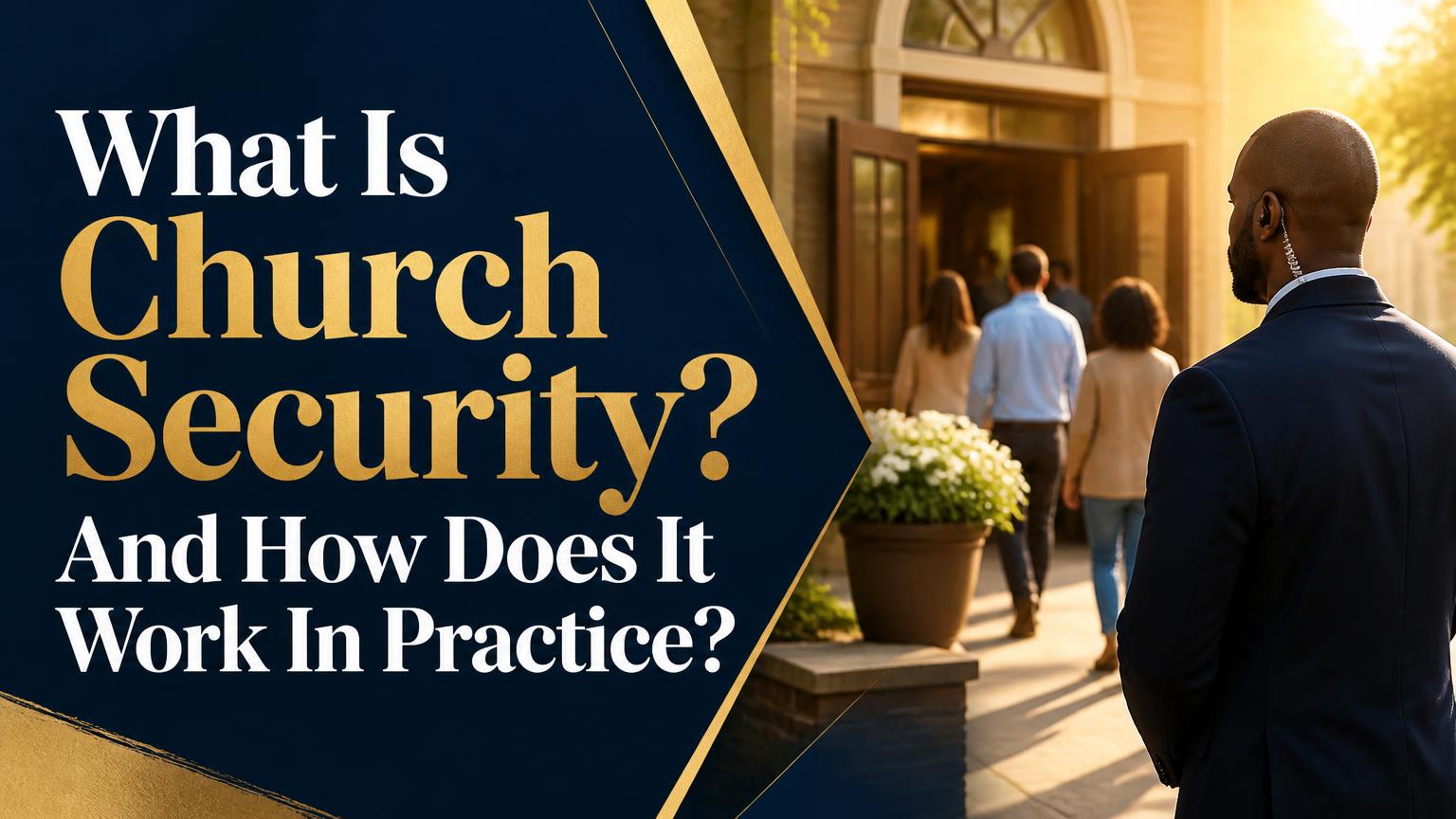
Church security is the organized effort to protect people, facilities, information, and ministry activities from preventable harm while preserving a welcoming environment for worship and community life. It includes more than guards, cameras, or locked doors. Effective church security combines risk assessment, access procedures, child protection, emergency planning, trained volunteers and staff, communication systems, cybersecurity, and coordinated responses to incidents such as medical emergencies, fire, violence, severe weather, theft, or abuse.
What Is Church Security?
Church security is a coordinated system of policies, people, training, and physical measures designed to reduce risks and respond appropriately when something goes wrong. The goal is not to make a congregation feel like it is entering a fortress. It is to create a reasonably safe environment in which worship, teaching, childcare, fellowship, outreach, and other activities can take place.
A sound program is proportionate to the church’s size, location, facilities, activities, and known risks. A rural congregation with one building may need different procedures from a large church operating multiple campuses, schools, day-care programs, or extensive community events.
What Church Security Includes
Church security commonly covers several connected responsibilities:
- Physical security: Doors, lighting, locks, cameras, visitor procedures, parking areas, and protection against unauthorized access.
- Personal safety: Prevention and response for violence, harassment, threats, medical emergencies, fire, severe weather, and accidents.
- Child and vulnerable-person protection: Screening, supervision, reporting procedures, room access, and policies that reduce opportunities for abuse.
- Emergency preparedness: Evacuation, sheltering, lockdown or secure-in-place procedures, first aid, communications, and reunification plans.
- Information security: Protection of member records, payment information, donor data, employee files, access credentials, and online systems.
- Operational continuity: Plans for keeping essential ministry functions operating or restoring them after a serious incident.
These areas overlap. For example, a church’s check-in system may support child protection, access control, emergency accountability, and accurate communication with parents.
How Church Security Works in Practice
Church security usually begins with a risk assessment. Leaders identify the people, property, activities, and information that need protection; consider likely hazards; and evaluate weaknesses in current practices. The assessment should include the sanctuary, classrooms, nurseries, offices, kitchens, parking lots, entrances, storage areas, and off-site ministry locations.
The church then establishes procedures suited to those risks. During a normal service, this might mean keeping certain exterior doors locked while maintaining a monitored entrance, assigning trained greeters, checking children into designated classrooms, and ensuring that staff know how to call emergency services. During a medical emergency, the response may involve first-aid-trained volunteers, a clear address for emergency dispatchers, someone meeting responders at the entrance, and a person directing congregants away from the scene.
For a serious threat, the response should rely on practiced procedures rather than improvisation. Staff and volunteers need to know how to report concerns, who makes decisions, how information is shared, and when to contact emergency services. Plans should be reviewed after drills, incidents, building changes, or changes in local conditions.
Who Is Responsible for Church Security?
Responsibility ultimately belongs to the church’s governing leadership, such as elders, pastors, trustees, or a board, depending on the congregation’s structure. Leaders set priorities, approve policies, provide resources, and ensure that security does not depend on one individual’s memory or personal judgment.
Day-to-day duties may be assigned to a safety coordinator, security team, facilities manager, children’s ministry director, or trained volunteers. These roles should be clearly defined. A security team should not operate as an independent authority or create procedures that conflict with church leadership, emergency responders, safeguarding policies, or applicable law.
Everyone also has a limited role. Greeters, teachers, ushers, office staff, and members should know how to report suspicious behavior, accidents, threats, or safeguarding concerns. They do not need to confront every unusual person or investigate allegations themselves. Their primary responsibilities are observation, timely reporting, following established procedures, and helping preserve calm.
The Core Areas of a Church Security Plan
A complete plan connects prevention, preparation, response, and recovery. Focusing only on visible security measures can leave serious weaknesses in childcare, emergency communication, or data protection.
Physical Security and Access Control
Physical security begins with understanding how people move through the property. Churches should identify public entrances, restricted areas, staff-only spaces, children’s areas, emergency exits, and locations where supervision is limited. Good lighting, functioning locks, clear signs, maintained doors, and unobstructed exits often reduce risk more effectively than expensive equipment.
Access control does not necessarily mean locking every door. It means deciding who should enter each area, at what times, and under what conditions. A church might use a monitored main entrance during services, controlled access to classrooms, keys or electronic credentials for staff, and procedures for contractors or after-hours visitors. Cameras can support awareness and investigation, but they do not replace people, policies, or prompt reporting.
Child Protection and Safeguarding
Child protection is a central part of church security because children may be separated from their parents and placed in the care of staff or volunteers. Safeguarding policies commonly address volunteer applications, background screening where legally available, training, supervision, appropriate physical boundaries, transportation, restroom procedures, room access, and the handling of allegations.
A widely used principle is to avoid situations in which one adult is isolated with one child, although the precise policy should reflect local law and the church’s safeguarding framework. Churches should also maintain clear procedures for reporting suspected abuse to the appropriate authorities. Internal investigation or informal mediation should never replace legally required reporting or professional intervention.
The purpose of these measures is not suspicion toward every volunteer. It is to reduce opportunity for abuse, make concerns easier to identify, and ensure that children and families know how the church responds when something seems wrong.
Emergency Response and Medical Preparedness
Churches face ordinary emergencies as well as deliberate threats. A useful emergency plan addresses fire, severe weather, earthquakes where relevant, utility failures, missing children, medical crises, hazardous materials, aggressive behavior, and violence. Each type of incident may require a different response: evacuation, sheltering, securing rooms, calling emergency services, or moving people away from danger.
Plans should identify evacuation routes, accessible exits, assembly areas, fire extinguishers, first-aid supplies, automated external defibrillators where available, and people trained to use them. They should also account for children, older adults, people with disabilities, and visitors who may not know the building.
Communication is as important as equipment. Staff need reliable ways to contact one another, and emergency instructions should be short enough to use under stress. Drills can expose problems such as blocked exits, confusing room numbers, poor mobile reception, or inadequate procedures for accounting for children.
Cybersecurity and Information Protection
Churches hold sensitive information even when they do not consider themselves technology organizations. Member directories, prayer requests, counseling records, donation details, payroll data, children’s information, and online account credentials can cause significant harm if exposed or misused.
Basic cybersecurity includes unique passwords, multifactor authentication where available, timely software updates, restricted administrative access, secure payment practices, regular backups, and caution with unexpected email attachments or payment requests. Volunteers should know how to recognize phishing and how to report a suspected compromise without embarrassment or delay.
Information should be collected and retained for a legitimate ministry or administrative purpose. Access should be limited to people who need it, and old records should not remain indefinitely simply because storage is inexpensive. Churches should also consider what happens if a key volunteer leaves with access to email, databases, social media, or building systems.
How to Build a Proportionate Church Security Program
A church can build an effective program without beginning with costly technology. Start by appointing a responsible leader or small planning group with representation from pastoral leadership, facilities, children’s ministry, administration, and, when appropriate, people with emergency-management or medical experience.
Next, conduct a practical walkthrough. Identify likely hazards, vulnerable activities, poorly lit areas, unlocked access points, communication gaps, and procedures that exist only informally. Review previous incidents, near misses, local threats, building occupancy, and the needs of people with disabilities. The objective is not to predict every event but to prioritize realistic risks.
Write concise policies for reporting, access, child protection, emergencies, weapons where applicable under local law, severe weather, missing children, data handling, and media communication. Assign responsibilities by role rather than relying on names alone, since volunteers and staff change. Train people in what they are expected to do, and rehearse selected procedures at reasonable intervals.
After an incident or drill, conduct a debrief. Ask what worked, what failed, whether instructions were understood, and whether the response created unnecessary danger or confusion. Update the plan and communicate meaningful changes. A security program becomes reliable through this cycle of assessment, training, practice, and revision.
Church Security Must Balance Safety and Hospitality
Security should support ministry rather than undermine it. A congregation that treats every visitor as a threat may discourage newcomers, damage trust, and place volunteers in inappropriate enforcement roles. Conversely, a church that avoids all screening, access controls, or emergency planning in the name of hospitality may leave children, members, and visitors unnecessarily exposed.
The balance comes from using the least intrusive measure that reasonably addresses a known risk. Greeters can welcome people while observing the environment. Doors can be managed without making the building appear hostile. Child check-in can protect families while remaining simple and respectful. Trained personnel can focus on de-escalation and assistance rather than seeking confrontation.
Churches should also avoid presenting untrained volunteers as law-enforcement officers. Armed security, if considered, raises additional questions about training, authorization, storage, insurance, identification, communication, and the possibility of mistaken identity during an emergency. The legality and wisdom of such measures vary by jurisdiction and circumstance. Any church considering them should obtain qualified legal, insurance, and professional guidance.
Common Misunderstandings About Church Security
Church security is not the same as preventing every incident. No plan can eliminate all risk, and security measures can introduce new risks if they obstruct exits, delay emergency responders, mishandle personal information, or encourage unsafe confrontation. The appropriate standard is reasonable preparation and responsible risk reduction, not an unrealistic promise of absolute protection.
It is also not limited to an armed team or a watchful person at the sanctuary door. Many serious church risks involve abuse, unsafe facilities, medical emergencies, theft, cybercrime, or poor communication. A congregation may have visible guards and still lack effective safeguarding or evacuation procedures.
Finally, security is not solely a security-team function. Leadership, staff, volunteers, parents, members, contractors, and visitors interact with the system. Clear policies make that shared responsibility manageable by telling people what to notice, whom to contact, and what actions are appropriate.
Conclusion
Church security is a coordinated approach to protecting people, property, ministry activities, and information while preserving a welcoming church environment. It works through risk assessment, sensible access control, child safeguarding, emergency preparation, trained personnel, clear communication, cybersecurity, and regular review. The strongest programs are proportionate rather than theatrical: they address realistic risks, emphasize prevention and de-escalation, comply with applicable law, and help ordinary staff and volunteers respond calmly. Security is therefore best understood as an ongoing ministry and governance responsibility, not a single product or the presence of a guard.