
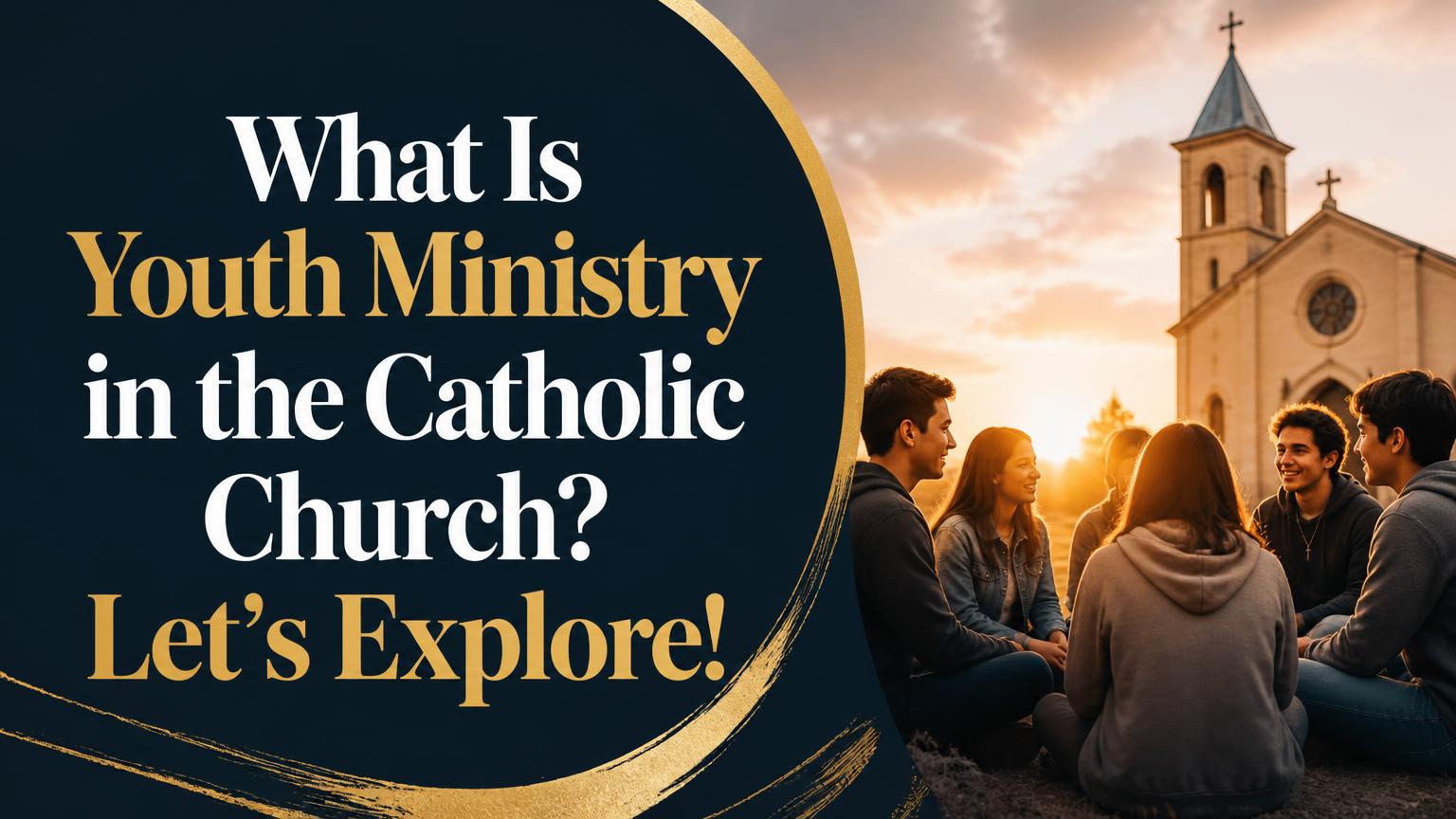
Youth ministry in the Catholic Church is the Church’s pastoral work with adolescents and young adults. It helps young people encounter Jesus Christ, grow in faith, participate in the sacramental and communal life of the Church, discern their vocation, and serve others. It is broader than religious instruction or social activities: Catholic youth ministry seeks to form committed disciples who can live and share the Gospel in ordinary life.
The exact age range and structure vary by parish, diocese, country, and cultural setting. Some programs focus on teenagers, while others include university students, young professionals, or adults in their twenties and thirties. Despite these differences, the central purpose remains the same: accompanying young people as they grow in relationship with Christ and take an active place in the Church.
What Is Youth Ministry in the Catholic Church?
What Youth Ministry Means
Catholic youth ministry is an organized but relational way for the Church to accompany young people. It includes the people, communities, practices, and programs that support their spiritual, human, and vocational development. A parish youth group, diocesan retreat, Catholic campus community, service project, Bible study, or young-adult fellowship may all be forms of youth ministry when they intentionally lead participants toward Christian discipleship.
The word “ministry” means service. Youth ministry therefore is not simply something adults do to young people. It is service offered with young people and, increasingly, through their leadership and gifts. Healthy ministry listens to their experiences, takes their questions seriously, teaches the Catholic faith clearly, and gives them meaningful opportunities to pray, serve, lead, and evangelize.
The Central Purposes of Catholic Youth Ministry
The central purpose is to help young people encounter Christ and respond to him with faith. This encounter includes personal conversion, participation in the Eucharist and Reconciliation, prayer, Scripture, moral formation, and a growing understanding of the Church’s teaching. Catholic ministry does not treat faith as information alone; it connects belief with a lived relationship with God.
Youth ministry also helps young people discover that they belong to a people rather than practicing Christianity in isolation. Parish life, small groups, retreats, service projects, and intergenerational relationships can give faith a visible and communal form. The goal is not merely to keep young people attending activities but to help them become mature Catholics who can make decisions, endure difficulties, serve others, and remain connected to the Church.
What Catholic Youth Ministry Looks Like
Catholic youth ministry can take many forms because young people have different needs and stages of development. Common activities include:
- Youth Masses and liturgical participation
- Small-group discussions and Catholic Bible studies
- Retreats, conferences, pilgrimages, and prayer nights
- Preparation for Confirmation, when appropriate
- Service with people experiencing poverty, illness, loneliness, or exclusion
- Social events that build friendship and belonging
- Mission trips and evangelization projects
- Leadership training for peer ministers
- Vocational conversations about marriage, priesthood, religious life, and other forms of service
- Campus ministry for students in colleges and universities
These activities are most effective when they work together. A service project can open a conversation about the Gospel; prayer can lead to greater compassion; catechesis can help a young person understand the faith being celebrated at Mass. An isolated event may be enjoyable, but a coherent ministry connects experience, reflection, worship, community, and mission.
Young People as Participants, Not Just Recipients
The Catholic Church understands young people as members of the Church now, not merely future members. They need formation, but they also possess gifts, insight, energy, creativity, and a capacity to serve. Youth ministry should therefore give them real responsibility suited to their maturity, such as leading prayer, planning outreach, proclaiming Scripture, mentoring younger participants, or helping shape parish activities.
This principle does not mean that adults withdraw their guidance. Young people need trustworthy adults who provide structure, theological formation, boundaries, and encouragement. The strongest model combines adult accompaniment with genuine youth leadership. The apostle Paul’s instruction to Timothy, “Let no one despise your youth” (1 Timothy 4:12), reflects the Christian conviction that young people can bear credible witness through their words, conduct, love, faith, and integrity.
The Main Dimensions of Catholic Youth Ministry
Evangelization and Encounter With Christ
Evangelization means sharing the Gospel and inviting people into a relationship with Jesus Christ. In youth ministry, this may begin with personal testimony, a retreat, a conversation about suffering, a moment of prayer, or a welcoming community. It should address both those who are already practicing Catholics and those who are distant from the Church or uncertain about faith.
Evangelization is not pressure or emotional manipulation. It gives young people freedom to ask difficult questions and make a genuine response. A Catholic approach presents Christ together with the fullness of the Church’s faith, including Scripture, the sacraments, moral teaching, and the hope of eternal life.
Discipleship, Catechesis, and Sacramental Life
Discipleship is the lifelong process of learning to follow Jesus. Youth ministry supports that process through prayer, spiritual direction or mentoring, Scripture, Catholic teaching, and participation in the liturgy. Catechesis has a central place because young people deserve clear answers about the Trinity, the Eucharist, the Church, human dignity, sin, grace, sexuality, justice, suffering, and vocation.
Catechesis should not be separated from worship. Catholic faith is learned through both teaching and participation. A young person may understand a lesson about the Eucharist more deeply by preparing for Mass, serving at the altar, joining in the prayers, and receiving Communion with proper disposition. The sacraments are not simply topics for discussion; they are encounters with Christ and sources of grace.
Community, Service, and Mission
Young people often need a community where they are known, welcomed, and challenged to grow. Small groups and parish relationships can reduce isolation and show that Christian faith involves mutual responsibility. This community should be open to newcomers while retaining enough substance to move beyond casual friendship.
Service gives faith a concrete direction. Catholic youth ministry may involve visiting elderly people, supporting food distribution, assisting refugees, caring for creation, or responding to local needs. Service is not merely a way to accumulate volunteer hours. In light of Matthew 25:31–46, caring for people in need is connected with encountering Christ himself. Good ministry combines action with reflection so participants understand why Christian service matters and how dignity, justice, mercy, and solidarity relate to the Gospel.
Accompaniment and Vocational Discernment
Accompaniment means walking with young people patiently rather than treating them as projects to be managed. It includes listening to their hopes, doubts, family situations, mental and emotional struggles, cultural experiences, and questions about the future. Adults can offer wisdom without pretending to possess an immediate answer to every problem.
Catholic youth ministry also helps participants discern vocation. Vocation is broader than choosing priesthood or religious life; it includes the call to holiness and the particular way a person may serve through marriage, single life, consecrated life, ordained ministry, work, family, and civic responsibility. Discernment asks not only, “What career do I want?” but also, “How is God inviting me to love and serve?”
Who Leads Youth Ministry in the Catholic Church?
Responsibility is shared. A bishop oversees pastoral life within a diocese, while a parish pastor normally coordinates parish ministry with staff, volunteers, parents, and young people. Dioceses may provide training, retreats, resources, and broader events. Religious communities, Catholic schools, chaplains, teachers, and campus ministers may also serve young people in particular settings.
Adult leaders need more than enthusiasm. They require formation in Catholic teaching, prayer, communication, adolescent development, cultural awareness, and appropriate boundaries. Because youth ministry involves minors and vulnerable people, safeguarding is essential. Screening, supervision, clear reporting procedures, safe environments, and compliance with applicable Church and civil requirements protect young people and strengthen the credibility of the ministry.
Parents remain important partners, especially with adolescents. Youth ministry should not replace family life or assume that a parish program can solve every challenge a young person faces. Instead, it can support parents, connect generations, and create additional relationships through which young people experience Christian care.
How Youth Ministry Relates to Other Catholic Ministries
Youth Ministry and Religious Education
Religious education or catechesis primarily teaches the content and meaning of the Catholic faith. Youth ministry includes catechesis but also emphasizes relationships, community, prayer, service, leadership, and mission. A classroom may explain the Sacrament of Confirmation, while youth ministry helps participants connect that sacrament with worship, belonging, Christian responsibility, and daily witness.
The two should support one another. Religious instruction without relationships can feel detached from life, while activities without sound formation can become shallow or lose their Catholic identity.
Youth Ministry and Catholic Schools
Catholic schools educate the whole person and integrate academic learning with Christian formation. School-based ministry may include campus liturgies, retreats, service, religious clubs, and pastoral counseling. Parish youth ministry serves a broader community and can include young people who attend public schools, homeschool, or no longer participate in formal education.
Cooperation between schools, parishes, and families helps prevent fragmented formation. Young people benefit when the faith they encounter in the classroom is consistent with the worship and community life of the parish.
Youth Ministry and Campus Ministry
Campus ministry focuses on students in colleges and universities. It often provides Mass, confession, Bible study, fellowship, service, leadership development, and support during a period of major intellectual, social, and vocational change. Its methods may differ from a parish program because university students have greater independence and face distinctive questions.
Nevertheless, campus ministry remains part of the Church’s broader mission with young people. It can help students maintain sacramental life, engage faith and reason, form healthy communities, and discern how Catholic convictions shape professional and public life.
What Makes Catholic Youth Ministry Healthy and Effective?
Effective ministry begins with relationships but does not stop at friendliness. Young people should encounter adults who are reliable, prayerful, well formed, and willing to speak honestly about the Catholic faith. Programs should be welcoming without becoming directionless, and doctrinally faithful without becoming cold or disconnected from real experience.
A healthy ministry also includes clear goals and ongoing evaluation. Leaders can ask whether young people are growing in prayer, participating more fully in the Church, understanding Catholic teaching, serving others, developing leadership, and discerning their vocation. Numbers at events may provide useful information, but attendance alone does not prove spiritual growth.
The Church’s apostolic exhortation Christus Vivit emphasizes that young people should be accompanied, respected, and engaged in the Church’s mission. That vision requires attention to those who are active as well as those who feel excluded, doubtful, poor, disabled, culturally isolated, or wounded by past experiences. Inclusion does not mean abandoning Catholic belief; it means removing unnecessary barriers and offering patient, truthful pastoral care.
Conclusion
Youth ministry in the Catholic Church is the Church’s sustained accompaniment of adolescents and young adults as they encounter Christ, grow in Catholic faith, participate in sacramental and communal life, discern their vocation, and serve the world. It includes far more than meetings or entertainment. Its activities—retreats, catechesis, worship, service, fellowship, leadership, and mentoring—have value when they form young people as disciples and active members of the Church.
The strongest Catholic youth ministry holds several realities together: sound teaching and personal relationship, prayer and service, adult guidance and youth leadership, parish belonging and outreach to those on the margins. Its success is measured less by the popularity of individual events than by whether young people are becoming mature, faithful, compassionate, and mission-oriented followers of Jesus.